
Pācina
Castelnuovo Berardenga (SI) - TUSCANY
Pãcina is a magic place. It’s a ‘living’ farm that hosts a diverse range of plants, flowers and animals. It is located in Castelnuovo Berardenga, along the ancient road connecting Arezzo and Siena, in the Chianti region of the Colli Senesi. Pãcina or ‘Pãchna’ is the name of Etruscan god of wine – who eventually became the Roman god Bacchus.
Giovanna Tiezzi and Stefano Borsa are carrying on a 1000-year old, local tradition of food and wine production. Their property includes vines, olive groves and woodlands. They grow spelt, chickpeas and lentils and many other fruits and vegetables. They have 65 hectares of land in total with around ten hectares dedicated to wine, fifteen hectares to other crops and eight hectares of trees. The rest is intentionally left uncultivated to help improve the biodiversity of their home.
Their vineyards are spread across a plateau of the local ‘tufo senese’ soil (sandy limestone and clay), with fossilised shells popping up here and there. The vines are exposure to the sun from all directions, and there is always a breeze which keeps the vines free of humidity and mould.
Giovanna and Stefano are lucky enough to have a site that doesn’t need anything, allowing them to farm with little or no intervention. According to Giovanna, it’s also the only way they know. They have never used chemicals in their vineyards because the vines have never needed it. The soils have a biodiversity stretching back hundreds of years. They produce wines that are representative of each soil and microclimate on the vineyard.
From the moment they started, their wines have been made without any additives, except for the odd tiny dose of sulphur dioxide at bottling if necessary. Everything is done by hand. Their wines are fermented with natural yeasts in old oak, acacia and concrete containers. They are bottled without clarification and filtering, and they only leave the cellar when they are ready.
Pãcina’s wines are delicate, pretty and floral, but with great structure and strength.

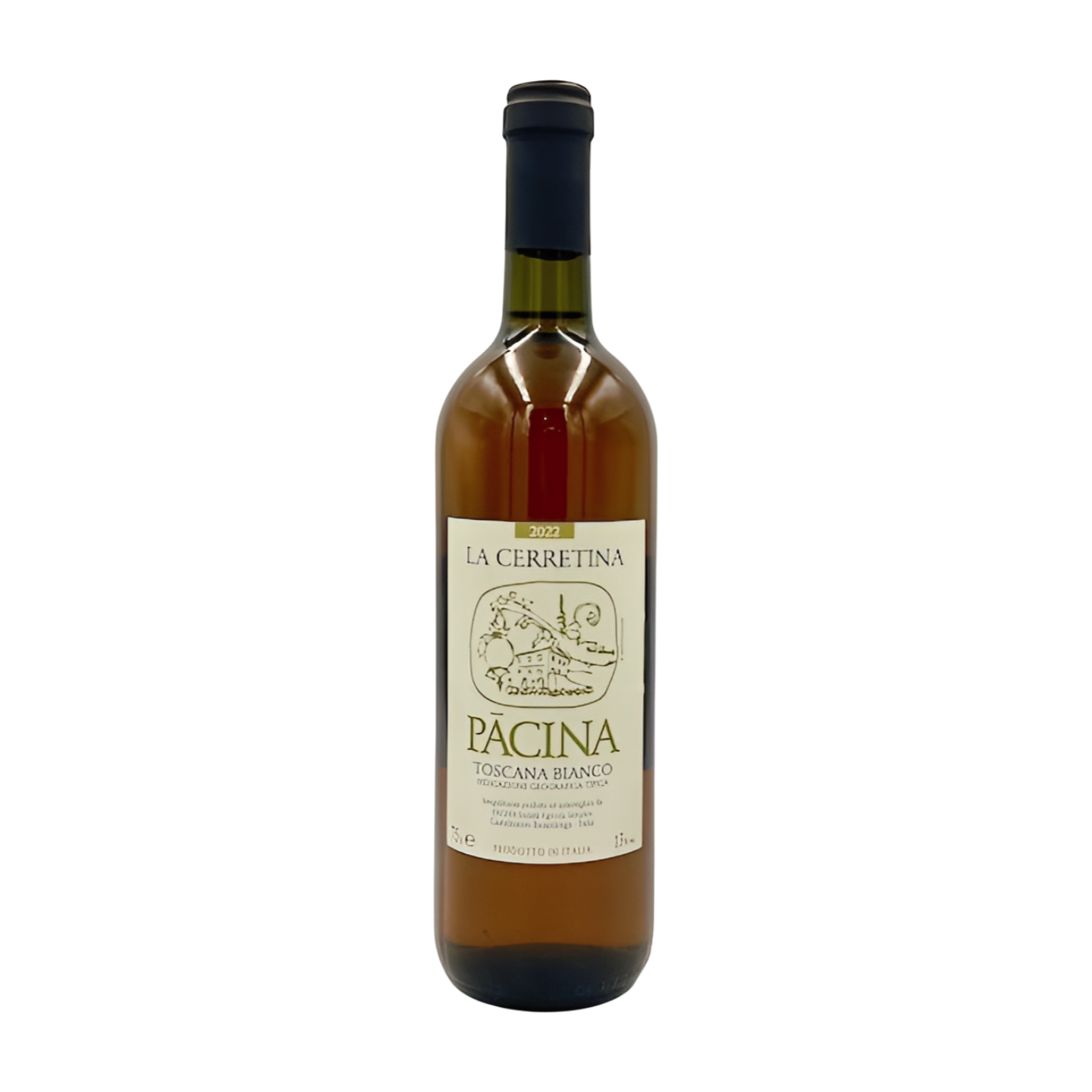
Producer | Pacina
Region | Tuscany
Varieties | Trebbiano Toscano, Malvasia del Chianti
Alcohol | 13.0%
Pacina’s limited white grape plantings are roughly equal parts Trebbiano Toscano and Malvasia del Chianti. Trebbiano Toscano (aka Ugni Blanc) has been grown in this region for at least six hundred years. It is late budding, resistance to powdery mildew and botrytis, naturally high acid, and abundant yields have made it extremely popular under a dozen synonyms across Europe. Unlike its blending partner, Malvasia del Chianti is susceptible to everything under the sun, making it a challenge to cultivate, especially organically. Its fuller body and higher alcohol levels are the perfect blend for Trebbiano. The grapes ferment on skins for ten days in concrete before being pressed off into 1000L botti for a yearlong élevage. The wine is bottled without SO2.

Producer | Pacina
Region | Tuscany
Varieties | Sangiovese
Alcohol | 14.0%
This wine is a “salasso” made with bleeding of Sangiovese grapes, fermented over the skins of Trebbiano Toscano and Malvasia del Chianti. After a short maceration in concrete the wine is pressed off into barrel for a minimum of ten months élevage. Like their other wines, this rosé is held back until an ideal drinking window, although, it can age much longer. It is bottled unfined, unfiltered, and with small amount of SO2.

Producer | Pacina
Region | Tuscany
Varieties | Ciliegiolo
Alcohol | 13.5%
Formerly, the family’s small plantings of Ciliegiolo were blended into their flagship red wine; after all, the variety is notoriously difficult to ripen fully. However, given the dramatic warming of the climate in recent years, Giovanna and Stefano have begun producing a separate bottling of Ciliegiolo. De-stemmed and fermented spontaneously, macerates on the skins for 20 days in concrete tanks. Aged for 12 months in concrete and steel tanks. Little addition of SO2.

Producer | Pacina
Region | Tuscany
Varieties | Sangiovese
Alcohol | 15.0%
Sangiovese for this wine comes from the vines that are too young to produce their top wine (10+ years old). The grapes are de-stemmed and fermented on skins in concrete tank. After an extended maceration, the wine is pressed into cement and stainless steel for a two-year élevage. It’s a wine that more than any others shows the vintage rather than anything else.

Producer | Pacina
Region | Tuscany
Varieties | Sangiovese
Alcohol | 14.5%
From up-to 40 years old vines. Made in exceptional vintages, a late harvest wine that comes enormous, but gentle enough to release younger. Sangiovese ferments on skins in concrete for an extended period of time before being pressed off back into concrete for a two year élevage. Because the tannins are softer, it does not require any time in barrel. After bottling unfined, unfiltered, and without SO2, the wine spends at least six months resting before release.

Producer | Pacina
Region | Tuscany
Varieties | Sangiovese, Canaiolo, Ciliegiolo
Alcohol | 15.0%
Their flagship wine is made from Sangiovese with a minor component of Canaiolo and Ciliegiolo (5%) grown on their estate in Chianti Colli Senesi. Vines are up to seventy-year-old, planted on “Tufo di Siena” soil. Grapes are de-stemmed and fermented on skins for two to six months in ancient concrete tanks before being pressed off. The wine then spends two years in a combination of 2500L botti, tonneaux, and barriques. The wine is bottled with a maximum of 10ppm of SO2 before spending at least two years in bottle before release. Vintages are seldom released consecutively; instead, they wait for the wine to reach optimal maturity. Pacina 2017 like ‘special” label says: “30˚ anno di questo vino” translated to “30 years of this wine”, is it wants to celebrate the incredible journey started in 1987 by Giovanna and Stefano, who immediately understood and bet on the potential of these vineyards and this territory.