
Cantine Matrone
Boscotrecase (NA) - CAMPANIA
Cantine Matrone is located in Boscotrecase, in the heart of the Vesuvius National Park. Andrea Matrone, graduated in Agriculture with specialisation in Oenology in Florence. After gaining experience making wine in Australia, New Zealand, California, Sicily and Cilento, he returned to his origins, on the slopes of Mt. Vesuvius, to an area which has always been known as ‘Territorio de' Matroni’ – ‘Matrone’s land’.
The Matrone family has been living here since the eighteenth century. In 2014, together with his cousin Francesco, Andrea started working their grandfather's old vineyards, giving life to the wine project he had always dreamed of: producing wines on Mt Vesuvius with great respect for territoriality and nature.
The vineyard is situated in a densely wooded area of the Vesuvius National Park, with a spectacular view of Capri and the Gulf of Naples. All the vines are bush trained and ungrafted, and cover about two hectares. Total production is 10,000 bottles. The vineyard is in the process of converting to organic production (it will be certified from 2024). But already it relies exclusively on copper, sulphur and clay to protect the grapes. Legume-based green manure is the only fertiliser used.
The vineyard’s yield is kept low to accentuate the pleasing saltiness of the wines which comes from the potassium in the volcanic soil. The wines are fermented pied de cuvé from native yeasts and all interventions in the cellar are kept to a minimum. The bulk of production is focused on two wines: Lacryma Christi Rosso and Lacryma Christi Bianco.
The iron-rich volcanic soils, surrounded by prickly pears, scotch broom and maritime pines make the Vesuvius region particularly suitable for the production of this type of wine. ‘Christ’s tears’ has been produced here since Roman times. The first to make it in a ‘serious’ way were local monks, whose convent stood on the slopes of Mt Vesuvius. Later the Jesuit Fathers, owners of vast lands in the areas, became its almost exclusive producers.
Andrea produces wines which are aromatic, precise and complex, while retaining the unique terroir-driven character and flavours typical of this wine.

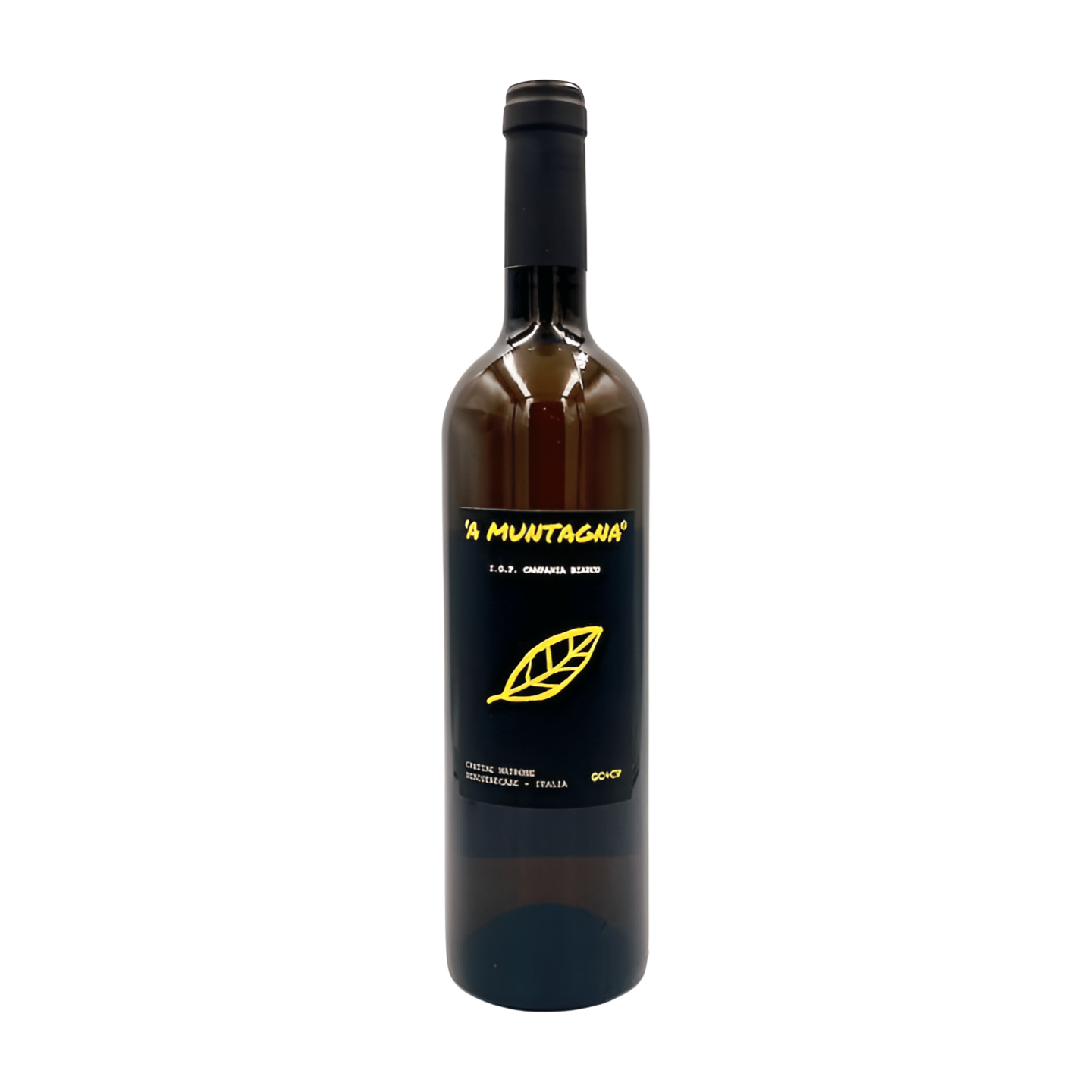
Producer | Cantine Matrone
Region | Campania
Variety | Greco, Caprettone
Alcohol | 12.5%
From a single vineyard, Vigna Montagna, located in Boscotrecase with southern exposure, volcanic sand, about 300 meters above sea level, planted in the 1960s. Obtained from a blend of 60% Greco and 40% Caprettone. Greco is vinified with just one day of maceration on the skins, while Caprettone macerates for 2 days. It is fermented in plastic tabs and aged in stainless steel for about 10 months. On the market after another 4 months in the bottle.

Producer | Cantine Matrone
Region | Campania
Variety | Piedirosso, Aglianico
Alcohol | 12%
Lacryma Christi Rosso is mainly produced from Piedirosso grapes, and the remaining percentage from Aglianico and minor part of other local varieties like Sciascinoso and Cancello. Piedirosso is distributed over three vineyards located at 30 – 120 – 200 meters above sea level and Aglianico are grown exclusively at 30 meters above sea level. The harvesting period is established on the basis of the seasonal trend, in general trying to wait for a good phenolic ripeness so as to be able to carry out macerations of 8/10 days. Pumping over and punch downs are carried out with variable time. At the end of fermentation the wine is then aged for 12 months in inox and release after at least one year in bottle. This wine is litterally the Vesuvius in a glass.

Producer | Cantine Matrone
Region | Campania
Variety | Caprettone, Falanghina, Greco, Piedirosso, Aglianico
Alcohol | 12%
Produced from the blend of all the company's white and red grapes. In 2023, downy mildew and adverse weather devastated the production, so only few bottles of this wine as well as 'A Muntagna Bianco were produced. This wine macerated for a total of 3 days and all the grapes were co-fermented. Fermentation and aging in stainless steel for 1 year. "'O Motom" was a motorbike widely used by local farmers in the 1980s: a fast and alternative means of transport, like the wine from this particular year.